 Tech · UAE Weekly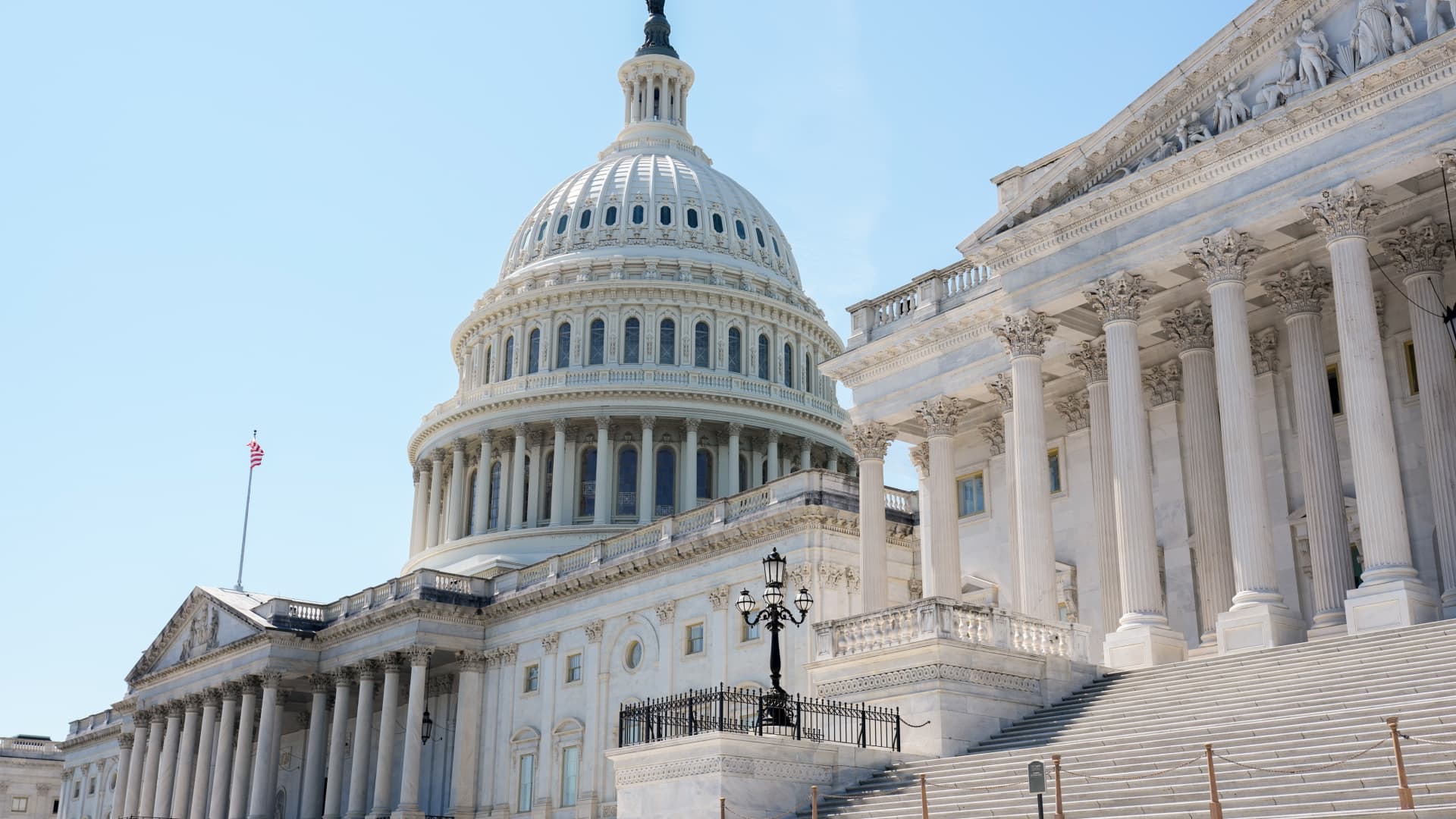
The US Capitol in Washington, DC, US, on Wednesday, Sept. 16, 2026. Daniel Heuer | Bloomberg | Getty Images Hello, this is Anniek Bao writing to you from Singapore. Welcome to another edition of CNBC's Daily Open.
Canadian Prime Minister Mike Carney told Brussels that Canada will pick its own partners, brushing off U.S. President Donald Trump's warnings. While apparently readying for a fight with the EU and Canada, Trump sounded optimistic about the Iran war nearing its end, even as tensions on the Saudi-Houthi front escalated, a reminder that one ceasefire doesn't calm a whole region.
The one place Washington's leverage is unambiguous is tariffs, where Congress just gave Trump a fresh weapon aimed at Beijing and New Delhi. What you need to know today European Parliament members gave Canadian Prime Minister Mark Carney a standing ovation Wednesday as European Commission President Ursula von der Leyen floated an "Alliance for the Future," with Canada as the bloc's first associate member. Trump dismissed the idea as "laughable" and called Canada a "terrible" trade partner, warning of heavy tariffs on Europe if the move was in bad faith.
"If it's a good intention, that's fine," he said. Carney welcomed the EU's proposal : "We do not seek power to dominate others ... We are pursuing resilience so that no one can control our open markets." Trump gets a bigger tariff stick The House passed a Russia sanctions bill granting Trump statutory authority to slap tariffs of up to 100% on countries buying Russian oil, days after BRICS leaders — China and India among them — publicly rejected unilateral secondary sanctions.
New Delhi and Beijing rank among the top five buyers of Russian crude, putting them squarely in Trump's crosshairs. Trade policy expert Deborah Elms said the law lets Trump "strike hard and quickly at any time for any reason." Neither China nor India are likely to cut back on Russian oil, though tariffs will give Washington leverage in dealing with New Delhi and Beijing, experts said. Iran war 'hopefully' winding down Trump said the U.S. is "hopefully" approaching the end of its nearly seven-month-long war with Iran, even as fighting continues to escalate on a separate front between Saudi Arabia and the Iran-backed Houthis in Yemen.
"Well, hopefully we are toward the end of the war. They want to make a deal, we'll see how that works out," Trump told reporters in North Carolina Wednesday evening, adding he'd spoken with Tehran "directly," without elaborating. U.S. stock futures were little changed Thursday night, a day after the major averages rose on the Fed's first rate hike in three years, while Asia markets opened higher as oil continued to slide for a third straight day.
Federal Reserve Governor Michelle Bowman, a permanent voter in the committee that makes interest rate decisions, and Kansas City Fed President Jeffrey Schmid, a non-voting member, are set to share remarks Friday — investors will listen for more color on Wednesday's unanimous hike. The Bank of Japan wraps its own two-day policy meeting Friday, and is widely expected to deliver a quarter-point hike to 1.25%, a 31-year high , though still within the BOJ's estimated neutral range of 1.1% to 2.5%. AI guardrails Nvidia CEO Jensen Huang said the company expects to sell twice as many chips in 2027 as it will this year, while urging for formal AI safety testing.
Palantir CEO Alex Karp called for "reasonable guidelines" on AI but said nationalization may ultimately be needed given the technology's "unlimited risks." "The view that I believe they have is, these businesses have to be nationalized because if you don't nationalize it, every single one of my clients is going to sue," Karp told CNBC's "Squawk on the Street" Thursday. Amid debate over whether frontier AI development should slow, Anthropic published three metrics it says the public deserves to see: AI-led research and development, oversight of AI agents and compute allocation within Anthropic. U.S.-based research firm Rhodium Group's report, meanwhile, highlighted how China's AI models were seeing rapid adoption, but that popularity isn't yet showing up as revenue. — Anniek Bao And finally...
Japan's corporate leaders sound alarm over weak yen — even dollar-earners are voicing concerns Japanese business executives, even those who have benefited from a weak yen, are calling for a stronger currency, with Kawasaki saying it would move manufacturing back to its home country if the yen strengthens. When the yen fluctuates, "we cannot make [a] strategy," Yoshinori Kanehana, chairman of Kawasaki Heavy Industries, told CNBC on the sidelines of the Gastech conference on Tuesday. He said it was the "biggest problem" for the company.
Kanehana said that yen at 150 could make him consider moving manufacturing from the U.S. to Japan. It has 27 production sites outside the country, including in the U.S., and 17 at home, according to a company report published last year. — Lisa Kim
Source: CNBC