 Tech · UAE Weekly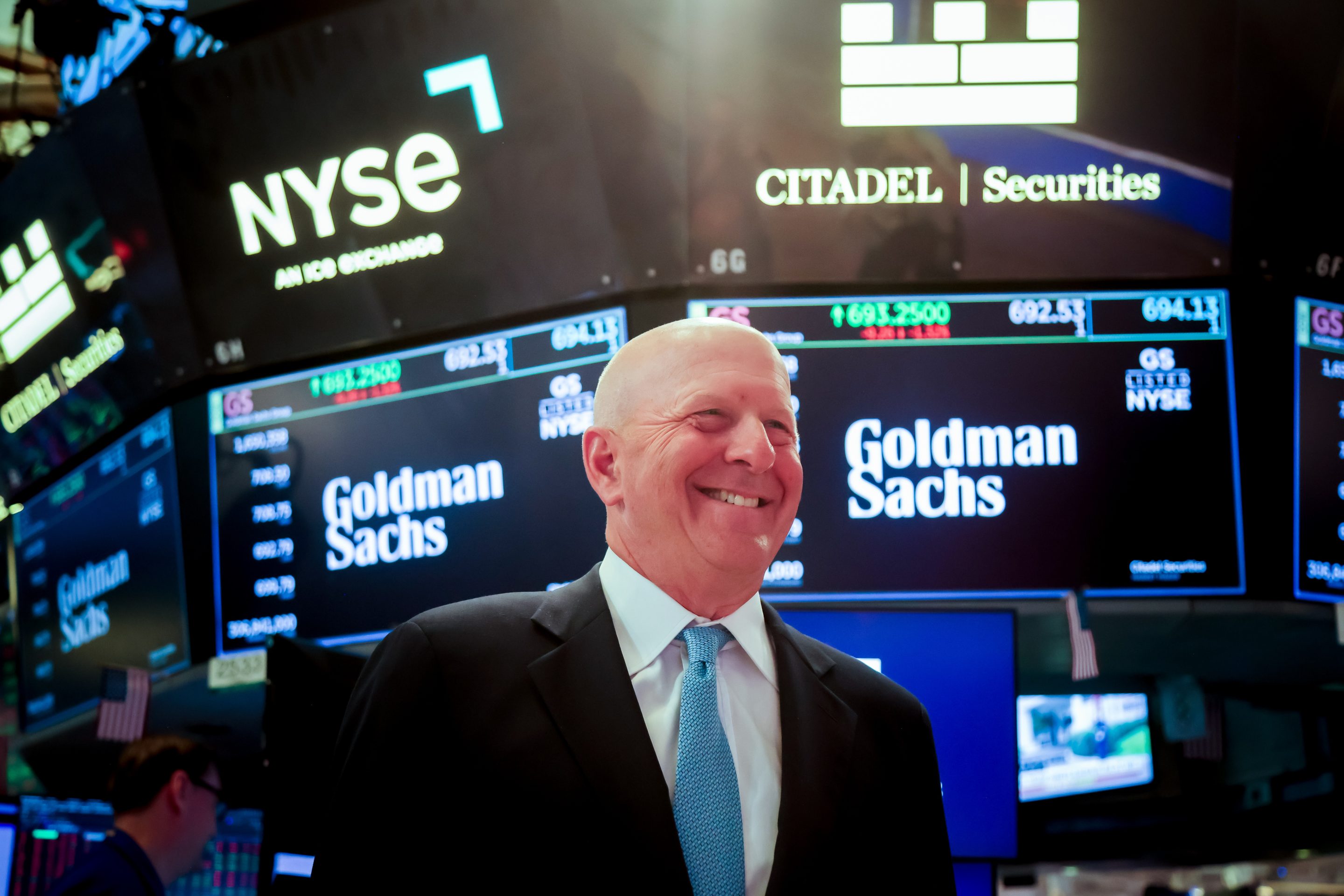
JPMorgan set the tone early Tuesday morning. For the first time in nearly three years, the nation’s largest bank by assets and market capitalization—about $888.1 billion—fell short of expectations on both profit and revenue. JPMorgan reported $50.17 billion in net revenue, below the $51.22 billion analysts expected.
Earnings per share came in at $5.57 versus $5.90, according to S&P Global Market Intelligence. The company’s earnings were weighed down by a slump in fixed-income trading and higher expenses. Fixed-income trading revenue fell 4% year over year to $5.4 billion—about $550 million below expectations.
JPMorgan’s non-interest expenses were $90 million higher than estimates as costs jumped 12% over the past year. All in, revenue rose by only 8%, a significant decline from the 27% increase in the second quarter. Still, JPMorgan CEO Jamie Dimon said in a statement that the bank reported “another quarter of strong results.” He did not directly address the earnings miss, but said investment banking activity “moderate[d] somewhat during the quarter.” On a call with reporters, JPMorgan CFO Jeremy Barnum described the bank’s dealmaking pipeline as “very, very strong.” JPMorgan was not the only bank to disappoint investors, though.
Bank of America missed earnings expectations on Wednesday, snapping a six-quarter beat streak. Profit fell 17% to $6.93 billion, or 91 cents per share, in the third quarter. Revenue was also below analysts’ estimates by roughly $570 million.
The results came just a day after regulators announced a $1.2 billion penalty on Bank of America, alleging that management failed to report billions of dollars in suspicious transactions. The penalty added to the pressure of an already lackluster quarter. One other laggard—albeit less surprising than JPMorgan or Bank of America—was Wells Fargo .
The bank missed on revenue despite surpassing earnings estimates, reporting revenue of $21.87 billion, below the $22.31 billion consensus. It was the third time in the past four quarters that Wells came up short on the top line. The winners Then there was Goldman Sachs’ blowout quarter.
On Tuesday, Goldman reported its second-highest quarterly net revenue ever at $18.68 billion and earnings per share of $17.01 for the third quarter, far exceeding expectations of $16.71 billion and $13.02, respectively. The equities business was the star of the show, with revenue surging 72%. CEO David Solomon described the quarter as a “very strong performance” for Goldman.
It might seem surprising that Goldman had such a strong quarter compared with JPMorgan. They are both premier dealmakers that compete for share in M&A and IPOs . But JPMorgan’s business mix is much broader than Goldman’s.
So, although Goldman saw some weakness in fixed income, the bank was able to offset it because of its enormous—and booming—equities desk. Other solid performers this week included Morgan Stanley . Overall profit and revenue climbed for the quarter and came in above expectations, supported by strength in equities trading.
Citigroup delivered a top- and bottom-line beat, with its best third-quarter revenue in a decade. What about the economy? Despite the mixed results on Wall Street, one theme unites the group: Management teams say the U.S. consumer is holding up despite higher rates and persistent inflation .
Citi CEO Jane Fraser said “the consumer is still driving much of the [economic] growth,” adding that “the labor market is stable, and companies remain active.” Wells Fargo CEO Charlie Scharf shared a similar sentiment, pointing to an increase in consumer spending, low loan-delinquency rates, and growing deposit balances. “While economic uncertainty exists and consumer sentiment remains mixed, our data shows that our consumer and business customers are doing well,” he told analysts. Tom Essaye, founder and president of Sevens Report Research, a financial research firm, agreed.
“Generally speaking, the qualitative commentary on [Well] call has reinforced that despite high prices, despite anxiety about wars, despite all the negative stuff that’s forming around the consumer, they just keep on trucking and are continuing to spend consistently,” he told Fortune . ‘The big question’ Still, looking ahead, it is unclear whether the consumer can remain this resilient for much longer. The Federal Reserve raised interest rates in September for the first time in three years.
And it does not help that inflation remains elevated, driven in part by surging energy costs tied to the Iran war. As Wells Fargo analyst Mike Mayo, head of U.S. large-cap bank research, told Fortune: “What happens as a result of much higher interest rates? That’s the big question.” Some other Wall Street analysts caution that the state of the consumer might not stay as healthy as some bank CEOs portray it.
CFRA’s Alexander Yokum acknowledged that the bank results themselves were solid and management’s tone was optimistic. But, he said, the outlook for credit—given sticky inflation and expectations of additional rate increases—is a concern. “Generally speaking, when you look at banking, when rates go up, something often breaks.
Last cycle, it started with the Silicon Valley Bank collapse, right? And then there were commercial real estate issues also,” Yokum, a senior vice president of equity research at CFRA, told Fortune. “So it’s hard to say what it will be this cycle, but it’s hard for me to believe that rates can rise significantly and all the banks will be fine.” He added, “The concern, for me, is more the future.” At least this time, Yokum said, the banks are well capitalized.
Source: Fortune