 Tech · UAE Weekly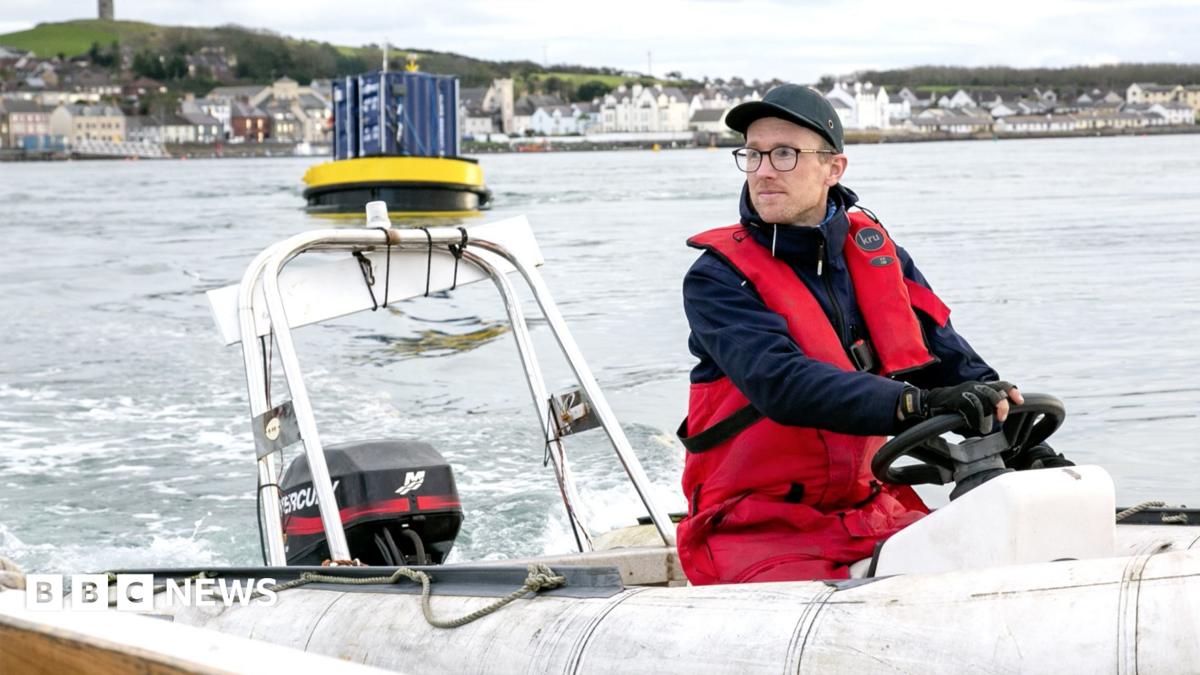
Image source, Flex Marine Power Image caption, Engineer David Mummery says tidal power could change lives in coastal communities By Paul Hastie BBC Scotland In a secret location in the Highlands of Scotland, there's a fast-flowing river that's the key to understanding the massive power of water. It's where engineer David Mummery found himself more than a decade ago. With a length of cord tied tightly across the river, he swam out, gripped firmly, and let the unstoppable current rush over as he sunk his head below the surface.
"As an engineer we do the maths and stuff," he says, "but sometimes you can get a lot more from actually touching the water and feeling it". As he lay down in the powerful rapids, he visualised a new type of small-scale tidal energy generator. It's an innovation he says could change lives for people in coastal communities.
"I'd be under the river, feeling the turbulence of the water rushing over me. "Trying to envisage how this turbine needed to interact with that environment - to understand the way the water was working." Image source, Flex Marine Power Image caption, The Swimmer Turbine prototype at Strangford Narrows in Northern Ireland Mummery's idea became the Swimmer Turbine - a 50kw tidal generator named after his experience in the river. Anchored to the sea floor, the fiberglass and steel device lies invisible below the water's surface.
It can generate enough electricity to power about 30 homes. He began tests in the river in early 2010s. On a patent lawyer's advice he found a secret location, far from curious Highland tourists and their cameras.
"You're trying to be quite discreet because you're working with new technology," he says. It was in the first years of his company, Flex Marine Power, long before Britain was gripped by the soaring costs of an energy crisis. Image source, Flex Marine Power Image caption, Fishermen on Islay learn how to assemble the Swimmer Turbine The size of the Swimmer Turbine is what sets it apart from large tidal projects dotted around Scottish waters.
Scotland is a world leader in the sector at sites including: Nova Innovation - The world's first tidal stream array, deployed in 2016 in Bluemull Sound in Shetland MeyGen - The world's largest tidal array, with four large 1.5MW turbines on the seabed of the Pentland Firth Orbital O2 - The world's most powerful floating turbine, generating 2MW, anchored at Fall of Warness in the Orkney Islands Mummery's turbine is ultra compact and low cost compared to these giant machines. Fishermen and local workers can build and install it themselves from their own village harbour. "Can you imagine like an Ikea furniture kit?
You get a shipping container and you'll open it up and it will be about 20 components. "You'll bolt them all together and then you've got your turbine ready. "There'll be a launch plan, you follow these instructions, then you'll be in the water." Mummery's work did not always focus on small-scale power.
Originally from Guildford, he studied mechanical engineering at Surrey University. Before founding Flex Marine Power, he was a sought-after consultant in the UK energy sector. For a time he specialised in nuclear work and decommissioning, designing robots for pulling material out of contaminated tanks.
He moved north after falling in love with a girl studying at Glasgow University. Jo became his wife and they now live in the city suburbs with three young children. Conveniently, Mummery's relocation came at a time when Scotland was establishing its reputation as a centre for marine power expertise.
Image source, Getty Images Image caption, The 180m-long Pelamis wave power project, nicknamed the sea snake In 2010 he took a secondment at Scottish Power Renewables on the ground-breaking Pelamis project in Orkney. The 180m-long (591ft) Pelamis P2 - nicknamed the sea snake - was the first deep-water, floating wave energy machine to generate power for the national grid. Ultimately, Pelamis went into administration in 2014 , but the ill-fated device remains celebrated as a milestone in marine power innovation.
"The industry is littered with these examples of fantastic technologies and teams that do brave things that take decades," Mummery says. "But at some point the market doesn't step up and they falter. Some really good ones have lasted the course, but others have not and it's sad." Image source, Flex Marine Power Image caption, David Mummery at home in Glasgow, where he established Flex Marine Power Mummery says the UK has "phenomenal waters for tidal power" and he loved being a part of major projects - but couldn't shake a discomfort.
His work felt incongruous to the many small coastal communities he found himself in. "I'd be going out on boats around Scotland doing sonar surveys with all these really expensive pieces of kit. "But the equipment was all really big, utility-scale stuff that would weigh hundreds of tonnes, shipped by people from the mainland.
"All the people I was meeting in harbours or in the pub were fishermen. And they were knowledgeable and they were interested. "I thought 'we've got to do this in a way that they can take the lead'." That, he says, is what motivated his Swimmer Turbine idea.
Image source, Flex Marine Power Image caption, The Swimmer Turbine is assembled on land and can be launched from a slipway In 2011 he left big projects behind to found Flex Marine Power and focus on his turbine concept. He spent hours at his desk sketching, working out how to make the technology smaller and lighter. He hired a student employee and found a sleek, glass office space outside Glasgow - which he quickly discovered wasn't entirely suited to an engineer and his tools.
"It was a lovely place, but I wasn't allowed to take a hammer drill into the office. "We were trying to make prototype turbines under the desk so the landlord wouldn't see them when he came in." Image source, Flex Marine Power Image caption, Learning the ropes, the local team in training off the coast of Islay Mummery turned to Clydeside's shipbuilding past in search of a more suitable workspace. He presented a plan to convert former shipyards for marine technology research, and was invited to Greenock by Inverclyde's redevelopment authority.
"There were lots of empty sheds that hadn't been used for years," he says. "They basically said 'we'll walk you around, you can pick a shed'. So I got the pick of the bunch right on the quayside." Mummery now had direct access to the River Clyde for sea trials to test his models.
He developed a prototype which he successfully trialled in 2015 on the island of Luing, in the Firth of Lorn, near Oban. It secured Flex Marine's first major investment and expansion the following year. Image source, Flex Marine Power Image caption, The Swimmer turbine can be installed without large cranes or heavy lift equipment The next major step was in Northern Ireland in 2020, at Strangford Narrows in County Down.
Mummery worked with Queen's University Belfast who had an academic license to test tidal equipment at sea. "Me and Mark, my accountant, lifted all of the components into a shipping container and sent it out on a lorry. "We were introduced to a bunch of local mariners.
We pulled off a full-scale tidal turbine installation out of a container deposited in a farmyard." Generating electricity while tethered to the back of a boat, Mummery says it was the full-scale proof-of-concept that "finally put us on the map". It helped Flex Marine Power secure £968,000 from the UK government's Energy Entrepreneurs Fund for a team of nine people to develop a commercial turbine model. This version would not be tied to a boat.
The Swimmer Turbine would launch directly from shore and remain absolutely hidden, generating electricity below the surface of the water. Image source, Getty Images Image caption, The waters of Islay are perfect for whisky and the tidal energy industry Mummery took it through months of testing last year on the island of Islay - famous for its many whisky distilleries and coastal waters that are perfect for tidal power. He rented space at a boatyard where "talented local people" were taught how to assemble and launch the device.
Finally, after his years of work, came the defining moment. "I was standing at the end of the slipway, seeing our machine, without any of my guys touching it. "It was all local people.
Fishermen, using their own tractor, launching it down their own slipway. This was my vision in a nutshell." Image source, Flex Marine Power Image caption, Assembled from a shipping container, the turbine is invisible below the water surface The next stage is putting the power to good use. Mummery will return to Islay next year with a plan to generate electricity for the island.
"The sea is a very big space and these things are invisible. There could be different tidal arrays in different parts of the island, all owned by different people. "In those real coastal communities, they don't have flashy cranes and heavy lifting capabilities and big corporate companies with big pockets.
"But what they do have is knowledge and work ethic and a deep understanding of their environment and the sea. "We're trying to equip real people to thrive by giving them access to the power that's in the tides."
Source: BBC